
AI Can Change the Work. It Cannot Carry the Decision.
By: Kristi Straw, CEO of Lighthouse Leadership Consultants
Kristi Straw will be on our Opening Keynote on this same topic at our 7th Annual 2026 Summit for Women in Tech.
AI is getting faster.
That isn’t the leadership problem.
AI can draft the memo, summarize the meeting, compare options, find patterns, and produce a recommendation before most teams have finished talking through the question.
It still cannot make people trust the judgment behind the decision.
A human has to do that.
And as technology accelerates the work, that part of leadership becomes more important, not less.
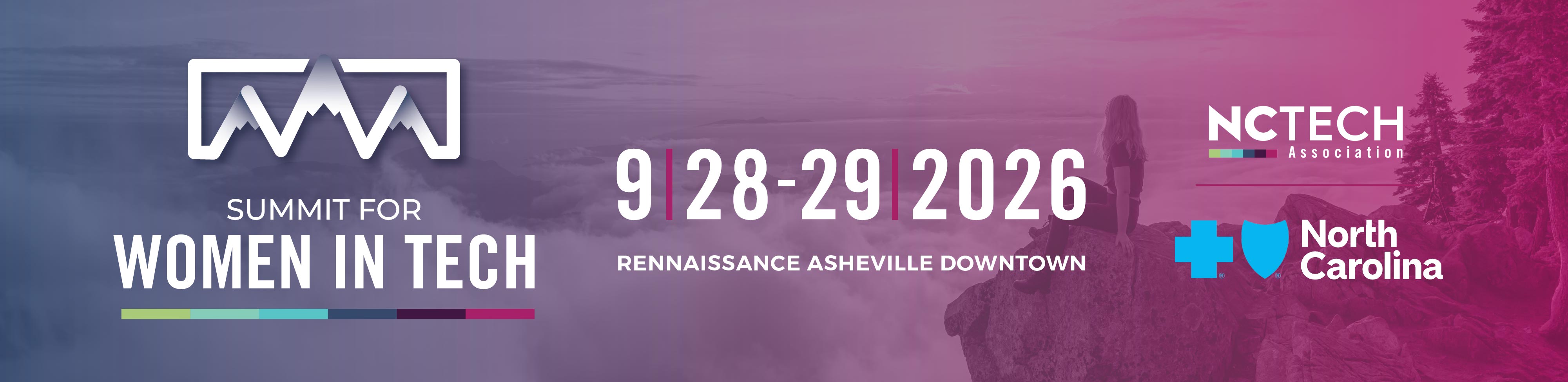
I’ll be exploring exactly that as the Opening Keynote Speaker at the 2026 NC TECH Summit for Women in Tech, September 28–29 in Asheville.
We’re not just going to talk about trust.
We’re going to put it to work.
Attendees will participate in a live Authentic Authority™ experience, identify how they naturally build trust and influence, and examine what happens to that authority when pressure enters the room.
And yes, we’re bringing the Authentic Authority™ Archetype Bar, because leadership development is better when there are stickers involved.
Speed changes the conditions
- A new AI tool enters an organization.
- A product team tests a new use case.
- Operations changes a process.
- A leader realizes something that took three weeks can now happen in three hours.
The technical questions come quickly.
What can it do?
How accurate is it?
Where can we use it?
What will it cost?
Those questions matter.
But they do not answer the leadership questions.
Who owns the final call?
What changes for the people doing the work?
Where does human judgment remain?
What happens when the technology gets it wrong?
What evidence will tell us whether this was actually a good decision?
The faster the technology moves, the easier it becomes to mistake speed for alignment.
They are not the same thing.
A clear presentation does not guarantee a clear decision
You can see trust friction in very ordinary moments.
A leader makes an announcement.
Someone asks what will change.
The leader explains the process.
Someone asks who owns the outcome.
The leader explains the safeguards.
Another person asks what happens when the system is wrong.
Soon the explanation is getting longer while confidence in the decision stays exactly where it was.
Because people are not only listening for information.
They are watching judgment.
They notice who can name the tradeoff.
They notice whether questions are welcomed or treated as resistance.
They notice whether the person leading the change understands what it means for employees, customers, managers, and partners.
They notice whether the rules stay consistent when pressure rises.
That is visible authority.
A title may give someone the right to make the decision.
Authority determines whether people trust that decision enough to act on it.
Trust is part of execution
Trust often gets treated as the soft side of leadership.
It is not.
Trust affects whether someone challenges a bad assumption early or waits until it becomes expensive.
It affects whether a decision holds after the meeting.
It affects whether managers repeat the same message or create five different versions of it.
It affects whether people use their judgment or protect themselves.
It affects whether customers believe the explanation they are hearing.
Eventually, it affects what moves.
Trust creates room for clarity.
Clarity improves the conversation.
Conversation creates better decisions.
Decisions create movement.
That movement may show up in adoption, execution, retention, customer confidence, innovation, or revenue.
But it begins much earlier.
It begins with whether people trust what is happening enough to participate honestly.
We do not all build trust the same way
Across more than 1,500 Authentic Authority™ assessments, five distinct patterns consistently appear in how leaders naturally create trust and influence.
Some leaders create trust through clarity and structure.
Some create momentum.
Some see what is coming before everyone else does.
Some create the conditions where people feel safe enough to tell the truth.
Some make the path to results difficult to ignore.
All five are valuable.
And every one of those strengths can create friction under pressure.
Clarity can start to feel like control.
Momentum can overwhelm.
Vision can outrun the people expected to execute it.
Empathy can keep a difficult conversation open longer than the decision can afford.
Efficiency can cost the buy-in required to move.
That does not make the strength wrong.
It means authority is relational.
What I intend is only half of the equation.
The other half is what people experience when I lead.
This matters for the women shaping technology
Women across the technology ecosystem are not simply responding to change.
They are helping determine how that change enters organizations.
They are building products, leading teams, translating strategy, advising executives, managing risk, serving customers, shaping operations, and making decisions before every variable is settled.
That requires more than technical fluency.
It requires the ability to make judgment visible.
To say what is known.
To say what is still being tested.
To name the tradeoff.
To create room for disagreement without losing momentum.
To make a decision and help people understand where their own judgment still belongs.
Because when AI changes the work, someone still has to carry the decision into the organization.
That is authority under pressure.
Four questions make the decision easier to locate
When leading an AI-related change, I come back to four questions.
1. What is the decision?
Say what has actually been decided.
Also say what has not.
Are we testing, adopting, expanding, pausing, or changing course?
People should not have to infer the level of commitment from a slide deck.
2. What is the human impact?
What changes in the actual work?
What changes for employees, customers, managers, or partners?
A technical explanation does not automatically answer a human question.
3. Where does judgment stay?
What can AI inform?
What still requires a person to review, interpret, approve, escalate, challenge, or care?
People need to know where expertise still lives.
4. What evidence comes next?
What will tell us whether this is working?
Customer response?
Quality checks?
Error rates?
Time saved?
Employee feedback?
Revenue?
The stronger the decision, the easier it should be to explain what evidence will determine the next one.
We’re going to make this personal in Asheville
At the NC TECH Summit for Women in Tech, I’ll invite the room to discover their own Authentic Authority™ Archetype live during the keynote.
Then we’ll look at what each authority pattern contributes, where it can become misread under pressure, and why two highly capable leaders can leave the exact same conversation with very different interpretations of what just happened.
Because the future of work is not only a technology conversation.
It is a trust conversation.
A judgment conversation.
A communication conversation.
And very often, a conversation we have been putting off.
AI will keep changing what the work looks like.
The leaders who matter most will be the ones who can still create the conditions for people to tell the truth, trust the judgment, and move.
I’ll see you in Asheville.
About Kristi Straw
Kristi Straw, MBA is Founder and CEO of Lighthouse Leadership Consultants™, author of UNICORN Leader: Driving Innovation and Influence in the Modern Era, and creator of Authentic Authority™. Her work helps leaders and organizations strengthen trust, improve decision movement, navigate high-stakes conversations, and turn authority into action.
Learn more about Kristi:
https://krististraw.com/
Register for the 2026 NC TECH Summit for Women in Tech:
https://ourmembers.nctech.org/ap/Events/Register/oXFKQ5wi6C2CBOkay
Learn more about this year's Summit for Women in Tech, September 28-29, this year in Asheville, HERE!
Interested in submitting a piece for the NC TECH blog?
NC TECH is always seeking fresh content and we love to feature our members and leaders as well as showcase your expertise and information. Visit our Marketing Toolkit page to submit Member Spotlights, Take 5 Executive Spotlights, Women Leading in Tech Profiles and Guest Blogs.
For more information about sharing your news, contact Alex Taylor.
